LaTeX templates and examples — Conference Paper
Seneste
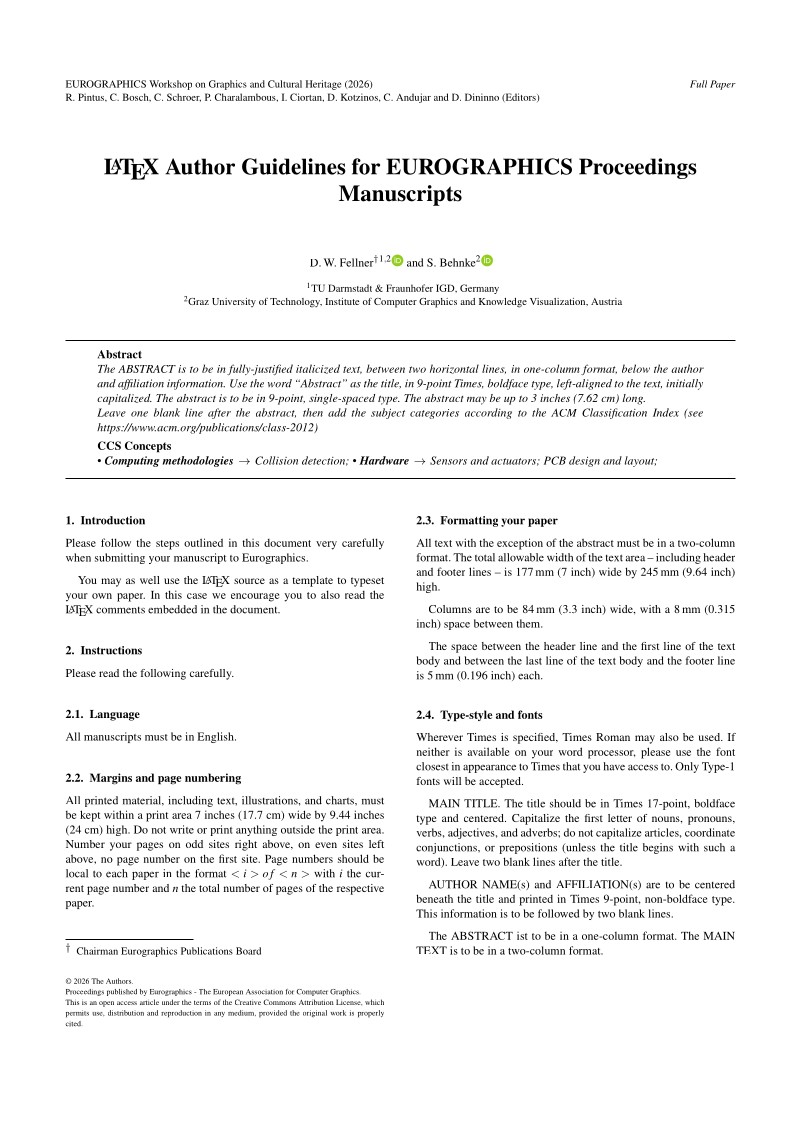
Official Latex Template for The 23rd EUROGRAPHICS Workshop on Graphics and Cultural Heritage (GCH 2026) The 23rd Eurographics Workshop on Graphics and Cultural Heritage (GCH 2026) will take place in Barcelona, Catalonia from November 2nd to November 5th at Universitat Politècnica de Catalunya. GCH brings together researchers, professionals, and institutions dedicated to the preservation, analysis, and communication of cultural heritage through computer graphics and visual technologies. Hosted in Barcelona — a city where history, art, and innovation meet — this edition will provide a vibrant forum to exchange ideas, present new research, and explore emerging methods for digital engagement with our shared heritage. We warmly invite you to join us in Barcelona to help shape the future of cultural heritage in the digital age. Call for Papers and Submission Guidelines are available at the following link: https://gch2026.virvig.eu/call-for-papers/
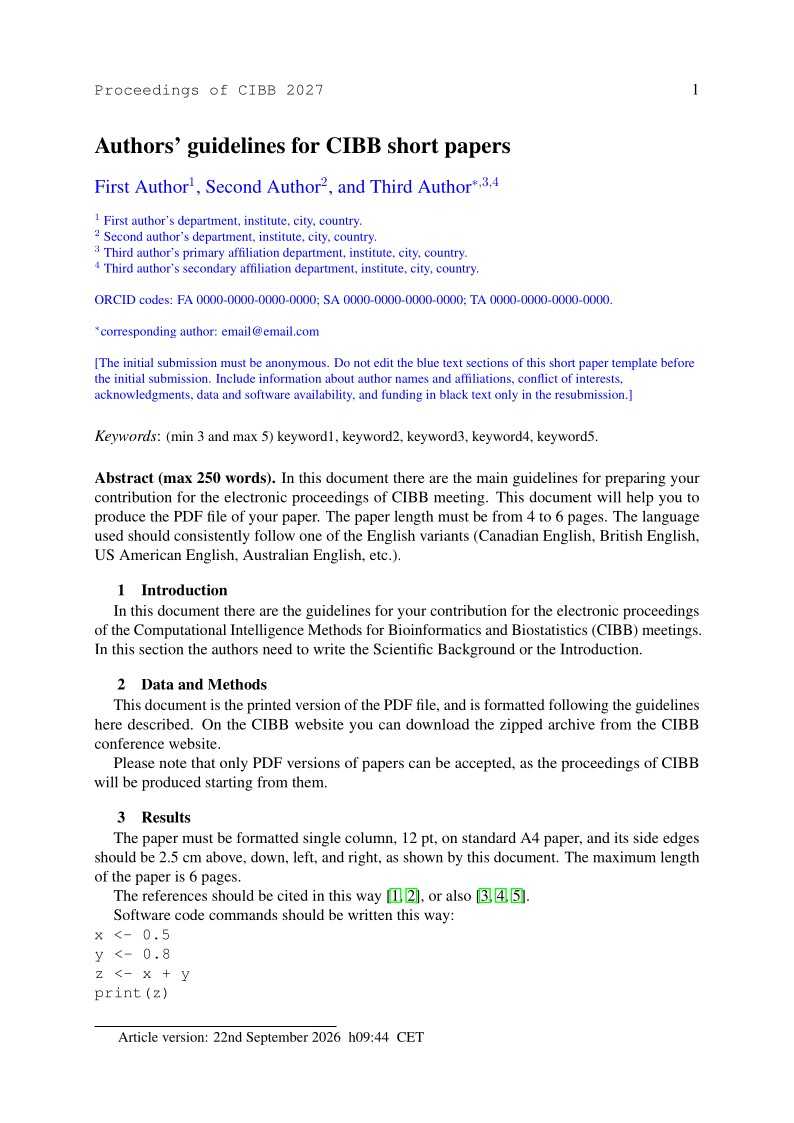
Template (v10) for the short papers for the CIBB conference. Document edited and uploaded by Davide Chicco and based on a the original document released by Francesco Masulli. Included anonymity texts.
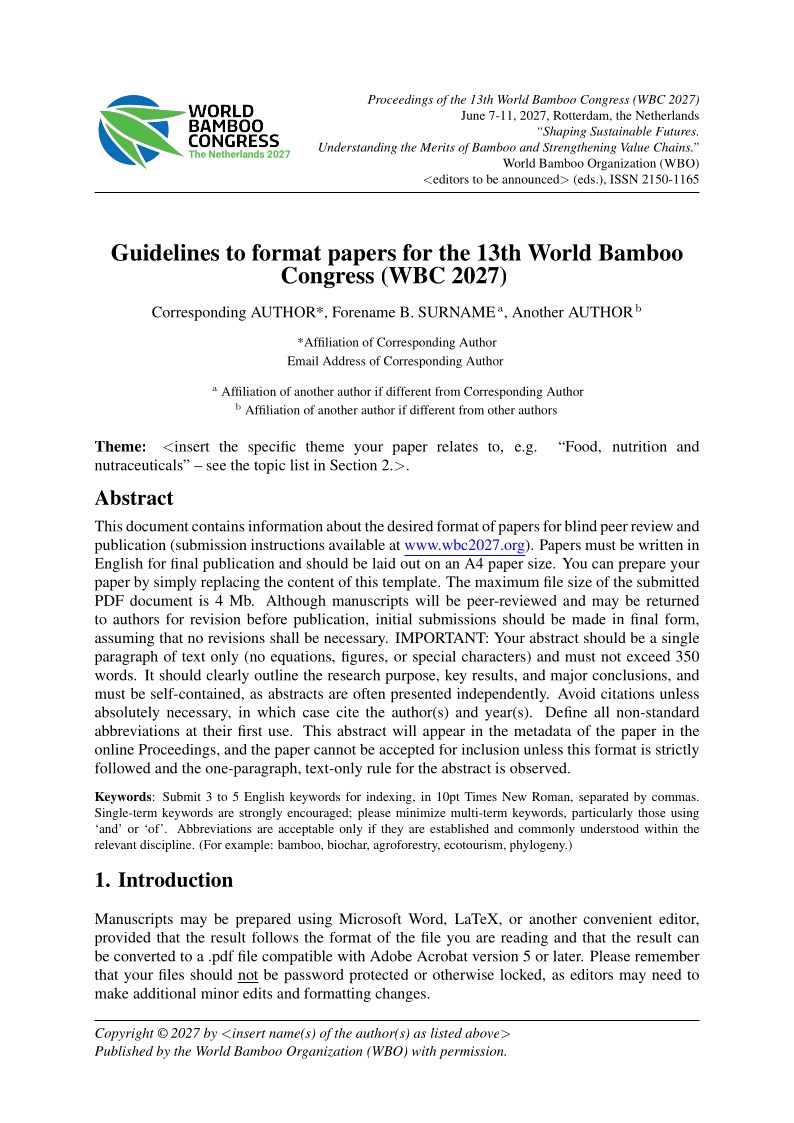
This is the abstract and paper template for the 13th World Bamboo Congress (WBC 2027), to be held in Rotterdam, Netherlands on June 7-11, 2027, organized by the World Bamboo Organization (WBO), and Summum Engineering Cooperative U.A. as the official Host. Papers will be submitted for peer-review to WBC 2027. Papers accepted in the Proceedings will be published by the WBO and will be made available open access. WBC 2027 | https://www.wbc2027.org WBO | https://www.worldbamboo.net/ contact | info@wbc2027.org
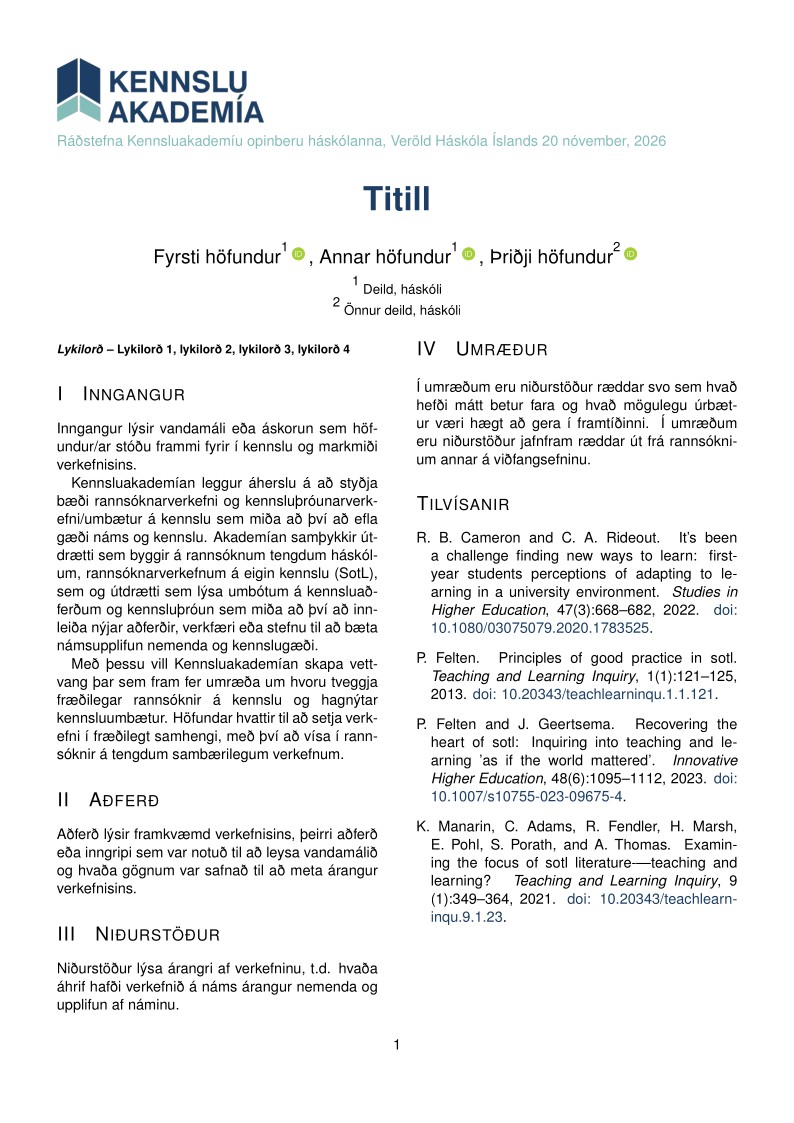
This LaTeX class (kennsluakademia_conf.cls) is specifically crafted for submissions to the Kennsluakademía opinberu háskólanna Conference in Iceland, a Nordic-inspired platform aimed at promoting educational development and improving teaching practices within Iceland’s public universities. The conference brings together educators to foster dialogue on teaching methods and pedagogical innovation. Features: Professional two-column layout with customizable conference information Author affiliation and ORCID support Simple integration of keywords Optimized for submissions to the Kennsluakademía Conference This class is designed to help educators create professional and well-structured extended abstracts for submission, aligning with the conference’s mission to advance conversations about education across universities.
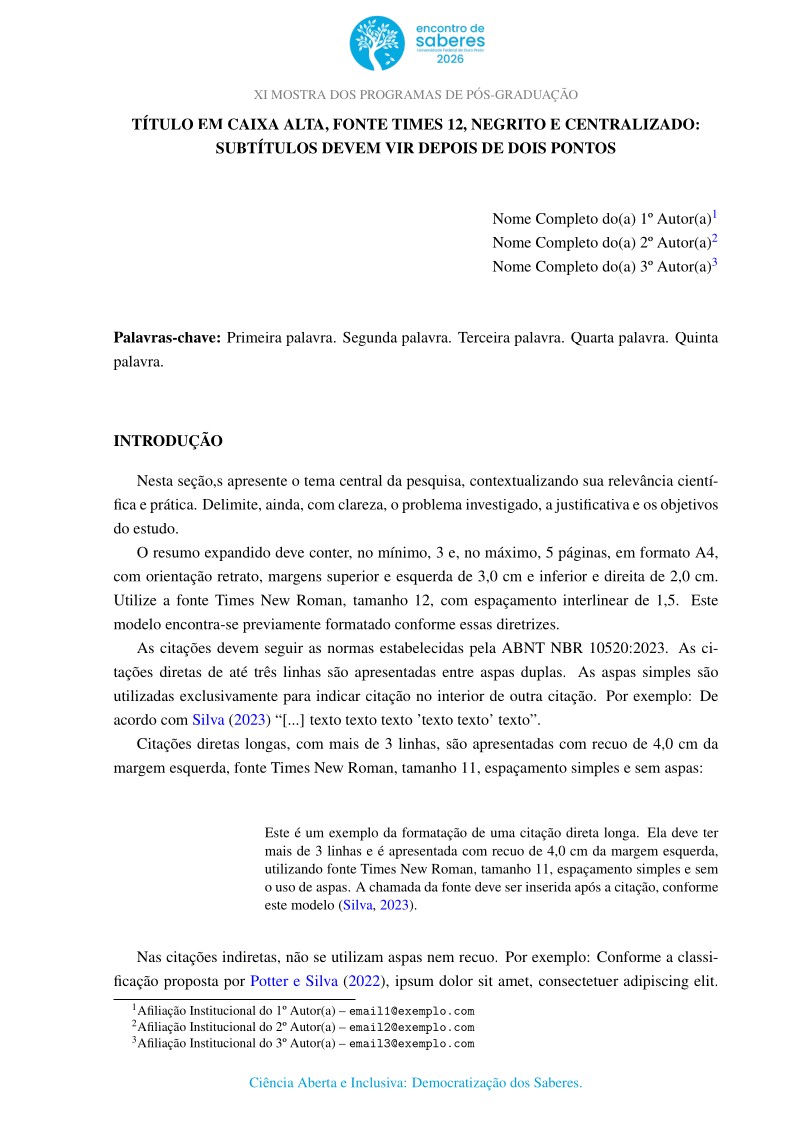
Templates para resumos expandidos e resumos simples a Mostra dos Programas de Pós-Graduação (MPPG) do Encontro de Saberes da Universidade Federal de Ouro Preto. https://www.encontrodesaberes.ufop.br/mostra.php?id=99
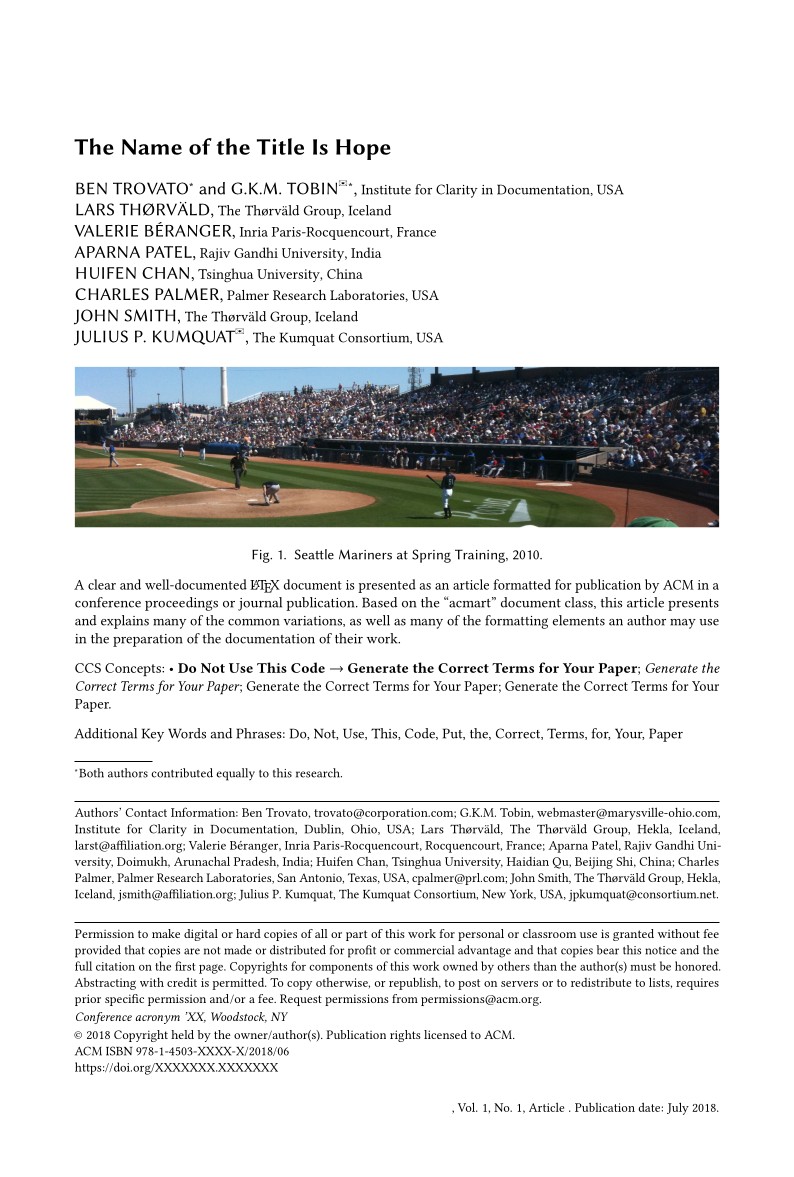
This is a sample file for ACM SIG conference proceedings with the acmsmall format specifications, using acmart.cls v2.19 (2026/07/02). It is provided by the ACM as a template for submissions, and pre-loaded in Overleaf (formerly writeLaTeX) for ease of editing online. Please see the ACM Submission Guidelines page for more details on manuscript preparation. Note: There are only a small group of ACM conferences which permitted to use this template. If you are unsure which template variant to use, please request clarification from your event or publication contact. Important information regarding submission versions for review: After finalizing the formatting of your paper you must use the option “manuscript” with \documentclass[manuscript]{acmart} command. This will generate the output in single column review format which is required. Accepted manuscripts will be transformed during production to produce properly formatted output accord to the publication specifications. Authors will be provided the opportunity to review and approve the formatted output before the article is published to the ACM Digital Library.
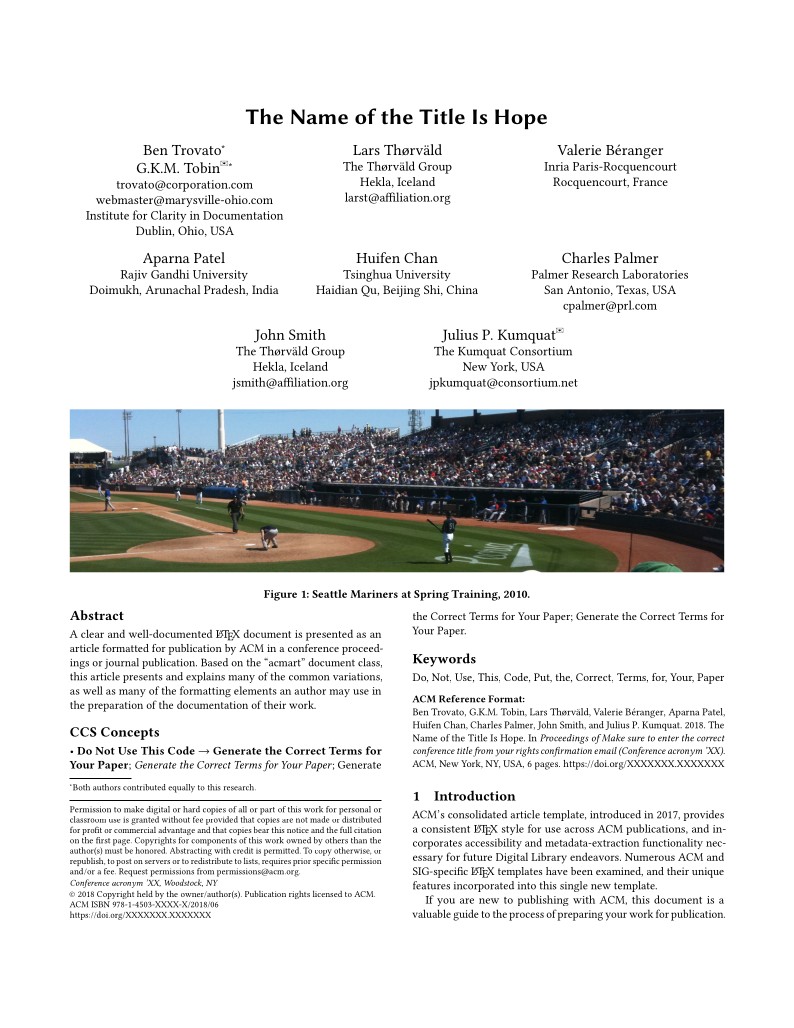
ACM has transitioned to a new authoring template. This new TeX template (acmart v2.19) consolidates the previous eight individual ACM journal and proceedings templates. The templates are updated to the latest software versions, developed to enable accessibility features, and they use a new font set. The new LaTeX package incorporates updated versions of the following ACM templates: ACM Journals: ACM Small, ACM Large, ACM and TOG (also for SIGGRAPH authors publishing in TOG) ACM proceedings templates: ACM Standard and SIGPLAN All journals use acmsmall with the following exceptions: acmlarge - Large single column format, used for IMWUT, JOCCH, PACMPL, POMACS, TAP, PACMHCI acmtog - Large double column format, used for TOG Note: Most proceedings authors will use the "sigconf" proceedings template. If you are unsure which template variant to use, please request clarification from your event or publication contact. Important information regarding submission versions for review: After finalizing the formatting of your paper you must use the option “manuscript” with \documentclass[manuscript]{acmart} command. This will generate the output in single column review format which is required. Accepted manuscripts will be transformed during production to produce properly formatted output accord to the publication specifications. Authors will be provided the opportunity to review and approve the formatted output before the article is published to the ACM Digital Library. Before using the 2017 ACM consolidated proceedings template, we strongly suggest that you read the TeX User Guide. Authors who plan to use their own packages should read the longer Implementation Guide.
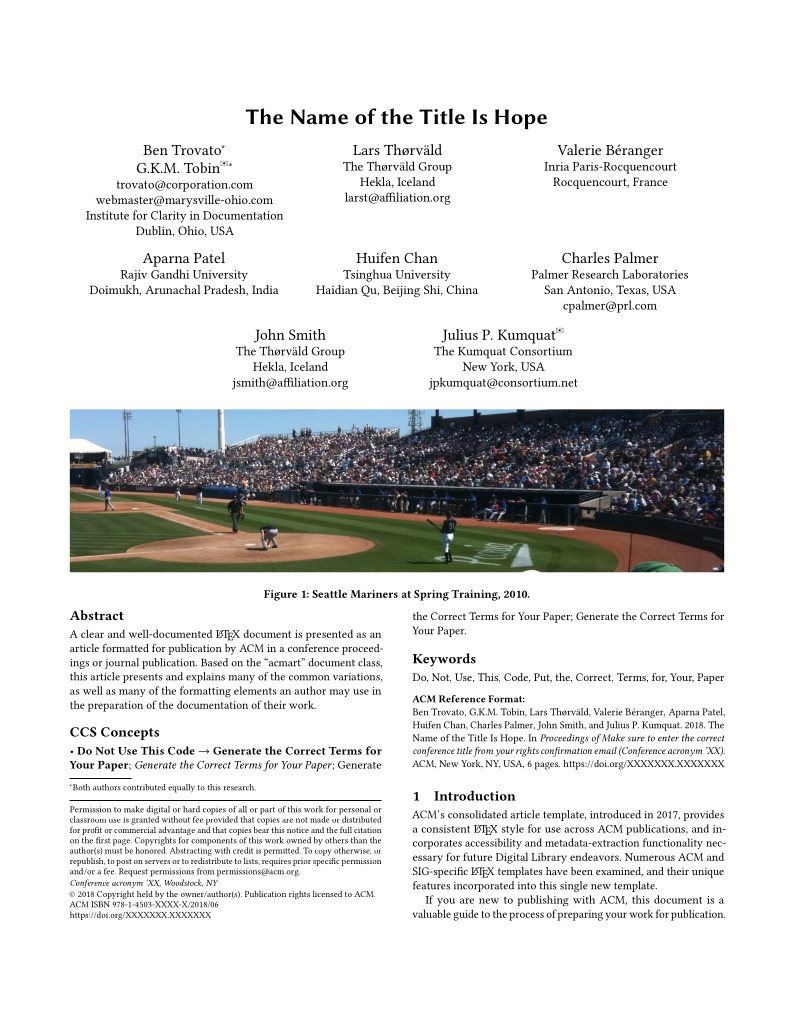
This is a sample file for ACM SIG conference proceedings (except SIGPLAN), using acmart.cls v2.19 (2026/07/02). It is provided by the ACM as a template for submissions, and pre-loaded in Overleaf (formerly writeLaTeX) for ease of editing online. Please see the ACM Submission Guidelines page for more details on manuscript preparation. Note: Most proceedings authors will use this "sigconf" proceedings template. If you are unsure which template variant to use, please request clarification from your event or publication contact. As of March 2017, this format (sigconf) should also be used for SIGGRAPH conferences; and as of May 2020 this format (sigconf) should also be used for SIGCHI conferences. Important information regarding submission versions for review: After finalizing the formatting of your paper you must use the option “manuscript” with \documentclass[manuscript]{acmart} command. This will generate the output in single column review format which is required. Accepted manuscripts will be transformed during production to produce properly formatted output accord to the publication specifications. Authors will be provided the opportunity to review and approve the formatted output before the article is published to the ACM Digital Library.
This is a sample file for ACM SIGPLAN conference proceedings, using acmart.cls v2.19 (2026/07/02). It is provided by the ACM as a template for submissions, and pre-loaded in Overleaf (formerly writeLaTeX) for ease of editing online. Please see the ACM Submission Guidelines page for more details on manuscript preparation. Note: Most proceedings authors will use the "sigconf" proceedings template. If you are unsure which template variant to use, please request clarification from your event or publication contact. Important information regarding submission versions for review: After finalizing the formatting of your paper you must use the option “manuscript” with \documentclass[manuscript]{acmart} command. This will generate the output in single column review format which is required. Accepted manuscripts will be transformed during production to produce properly formatted output accord to the publication specifications. Authors will be provided the opportunity to review and approve the formatted output before the article is published to the ACM Digital Library.
\begin
Discover why over 30 million people worldwide trust Overleaf with their work.